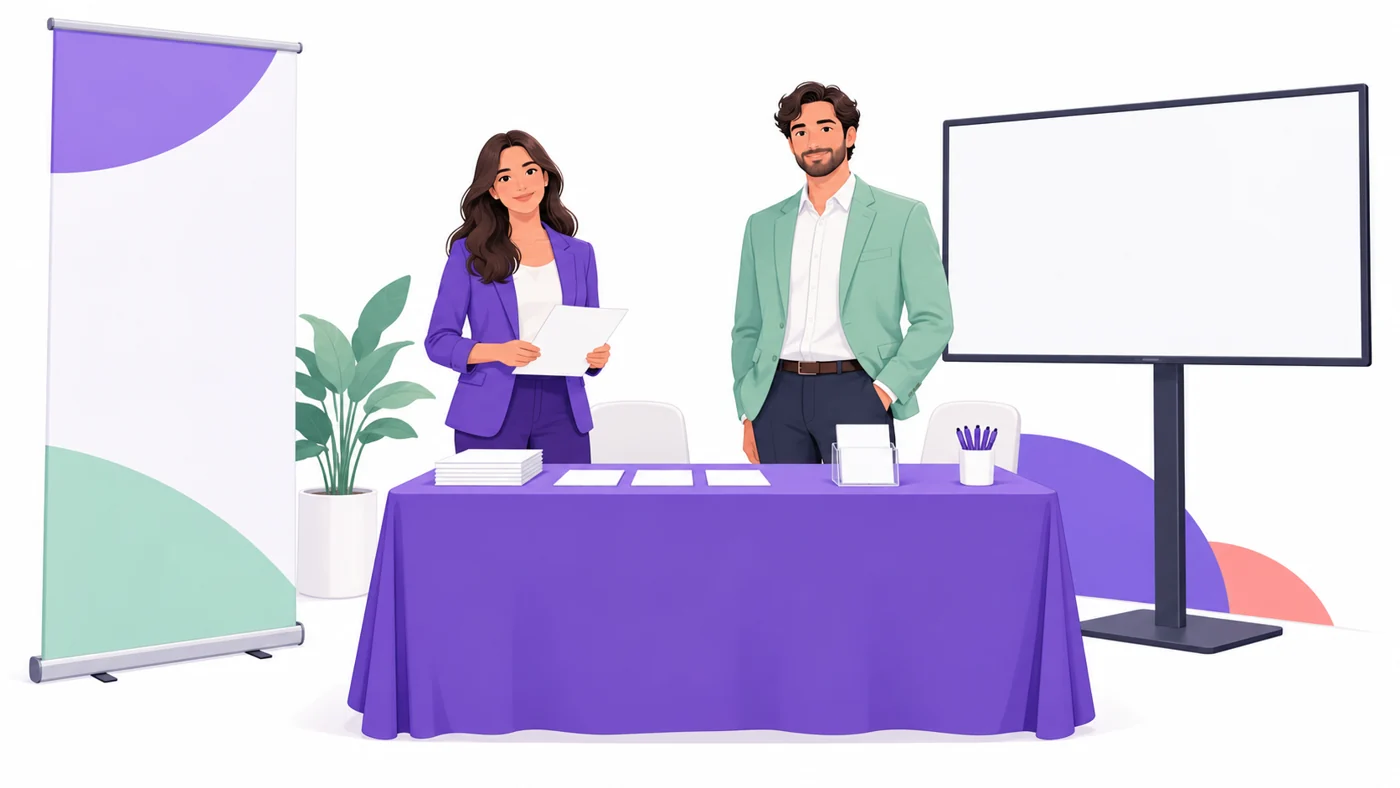
ABA conference marketing materials should help the right attendee understand your offering and remember a useful next step. A banner, brochure and presentation need to work together, but they do not need to repeat the same paragraph.
Start with the purpose of your participation. Are you explaining a product, discussing a service, sharing a resource or supporting a professional presentation? That decision should shape the materials before you order print quantities.
Write one audience question for the booth
A practice-owner audience may want to understand how a vendor's process works. A professional audience may want a general resource or a workshop summary. Use a message that describes the actual offering rather than claiming relevance to every person at the event.
For example, a content business might ask “How can a small ABA team organize its next month of social content?” A booth can then show a planning resource and examples of the formats available.
Assign a job to each asset
| Material | Job |
|---|---|
| Main banner | Identify the offering from a distance |
| One-page handout | Explain the process and relevant next step |
| Presentation | Address the approved session topic |
| Resource page | Give attendees useful information after the event |
| Follow-up brief | Record the process the team will use appropriately |
Do not put a complete service proposal on a banner. Keep the largest asset simple, then provide detail in a format that supports reading.
Confirm event facts with the organizer
Use the actual event name, dates and arrangements only after checking the official organizer information. Confirm which logos, claims and promotional language you may use. This guide is not a directory of current event schedules.
If a workshop includes clinical or credential-related content, identify the appropriate author, reviewer and approval route. A well-designed deck does not establish continuing-education eligibility. Our workshop slide guide separates visual planning from educational approval.
Create a destination that works after the conversation
An attendee should find the promised resource easily. Put the URL in text as well as a QR code. Test the destination on a phone and check that the resource is public if you intend it to be.
Use campaign labels to distinguish event-related traffic when useful, but do not put attendee details into the URL. Our UTM guide explains a consistent naming approach.
Plan follow-up before collecting contact details
Explain what a person is requesting and how your team will respond. Use your organization's approved process for contact information and messaging preferences. A badge scan or casual conversation should not become an unexplained marketing sequence.
Keep notes appropriate to the business purpose. Do not record sensitive client information in a booth marketing sheet. Your follow-up resource should not create an unofficial service-intake channel.
Make design handoff specific
Provide approved copy, print dimensions from the supplier, digital formats, brand files and a reviewer. Identify which materials need editable sources and who will own updates. Check the final print files at the actual size, not only in a zoomed design view.
Request an event design brief if your team needs coordinated visuals. ABA Business Builders is a related place to discuss branding and promotional collaboration when the intended audience fits.
Review the event's useful outcomes
Count conversations related to the intended offering, visits to the promised resource and appropriate follow-up completed by the team. Giveaways distributed or banner photos alone do not show that the message worked.
Afterward, record the questions attendees repeatedly asked. Use those questions to improve the resource and the next booth message. That gives the event materials a useful life beyond the days they stood on a table.